Siding Material Consultation: How to Choose the Best for Your Property
When you look at your property, what story does it tell? The right siding can frame your building like the perfect picture. The wrong one? It can leave you with headaches and unexpected costs down the road. At J.B. Siding, we know your choice today shapes how your home or business weathers tomorrow.
Choosing siding isn’t just about colors or curb appeal. It’s about protection, efficiency, and lasting value. And with so many materials on the market, the stakes feel even higher—especially when every dollar counts.
Why Material Choice Matters 🏡
Imagine siding as your property’s armor. It shields against rain, wind, sun, and even the neighbor’s stray baseball. But not all armor is created equal.
- The right material keeps out water and drafts. The wrong one can invite rot, pests, or high energy bills.
- Your choice impacts maintenance. Some materials ask for little; others demand yearly attention.
- It’s also about the future. Pick wisely, and you’ll boost resale value and lower repair costs.
Building codes and safety guidelines, such as those from the International Residential Code (IRC), set minimum standards for siding performance and installation. But going above the minimum can mean years of fewer worries.
Overview of Popular Siding Types
Let’s break down the favorites. Each has its own personality—some bold, others quietly reliable.
- Vinyl Siding: Low-maintenance, affordable, and available in countless colors. It resists fading and is easy to clean, making it a staple for New Construction Siding near you.
- Fiber Cement Siding: Strong as a mountain, fire-resistant, and mimics wood or stucco. It handles tough climates and stands up to pests.
- Wood Siding: Warm, natural, and timeless. It offers unmatched beauty but needs regular sealing or painting to keep moisture and insects at bay.
- Metal Siding: Think steel or aluminum. Durable, modern, and perfect for commercial siding. It won’t rot or burn, but it can dent.
- Stucco Siding: Classic texture, great insulation, and a favorite in dry climates. Needs a well-prepped surface and professional installation.
- Eco-Friendly Siding Options: Recycled materials or sustainably harvested wood. For those who want beauty and peace of mind.
Each type brings unique strengths—and a few quirks. Some last for decades with little fuss; others love the spotlight but expect regular care.
Factors to Consider (Climate, Budget, Style)
Choosing siding should feel like picking out the right coat for winter. Too light, and you’re shivering. Too heavy, and you’re uncomfortable.
Climate
- Harsh Winters or Wild Storms? Fiber cement and metal stand strong.
- Hot, Sunny Days? Lighter-colored vinyl or stucco can help keep interiors cool.
- Humid Conditions? Wood can swell or rot without regular maintenance, while vinyl and fiber cement shrug off moisture.
Budget
Your budget sets the stage, but remember—cheaper up front can mean bigger bills later. Vinyl is wallet-friendly, but if your area is prone to hail or high winds, investing in sturdier materials may pay off.
Style
- Modern builds often lean on metal or cement for crisp lines.
- Traditional homes glow with wood’s natural charm or subtle fiber cement.
- Commercial properties need durable, low-maintenance solutions.
Paint, trim, and custom siding options let you fine-tune your look. And with a siding color consultation, you’ll never have to guess if that bold blue is right for your facade.
The Real-World Impact of Your Siding Choice
Siding isn’t just a pretty face. It locks in comfort, keeps out the elements, and even shapes your energy consumption. The right pick can mean:
- Lower heating and cooling bills
- Fewer repairs after storms
- Less time on ladders with a paintbrush
And when it comes time to sell? Potential buyers notice fresh, durable siding first.
Quick Safety Checklist Before You Decide 🛠️
- Check local building codes and HOA restrictions. The IRC and your city’s guidelines spell out what’s allowed—and what’s not.
- Consider fire resistance, especially in wildfire-prone regions.
- Look for siding with proven wind and impact ratings (ASTM standards are a good benchmark).
DIY vs. Calling a Pro
Tempted to tackle siding yourself? For small repairs, a handy homeowner can patch trim or seal joints. But full siding replacement or custom installs? Those are best left to the pros.
A seasoned team brings:
- The right tools for every material
- Knowledge of moisture barriers and flashing
- Proper safety gear and techniques
One missed step can mean water leaks or code violations. If you’re unsure, a siding inspection from J.B. Siding saves you from guesswork.
What Pros Do On Arrival
When our team arrives, it’s not just about swinging hammers. We:
- Assess your structure and climate
- Review your style and maintenance preferences
- Take measurements and check for hidden water damage
- Discuss trim, molding, and ventilation solutions
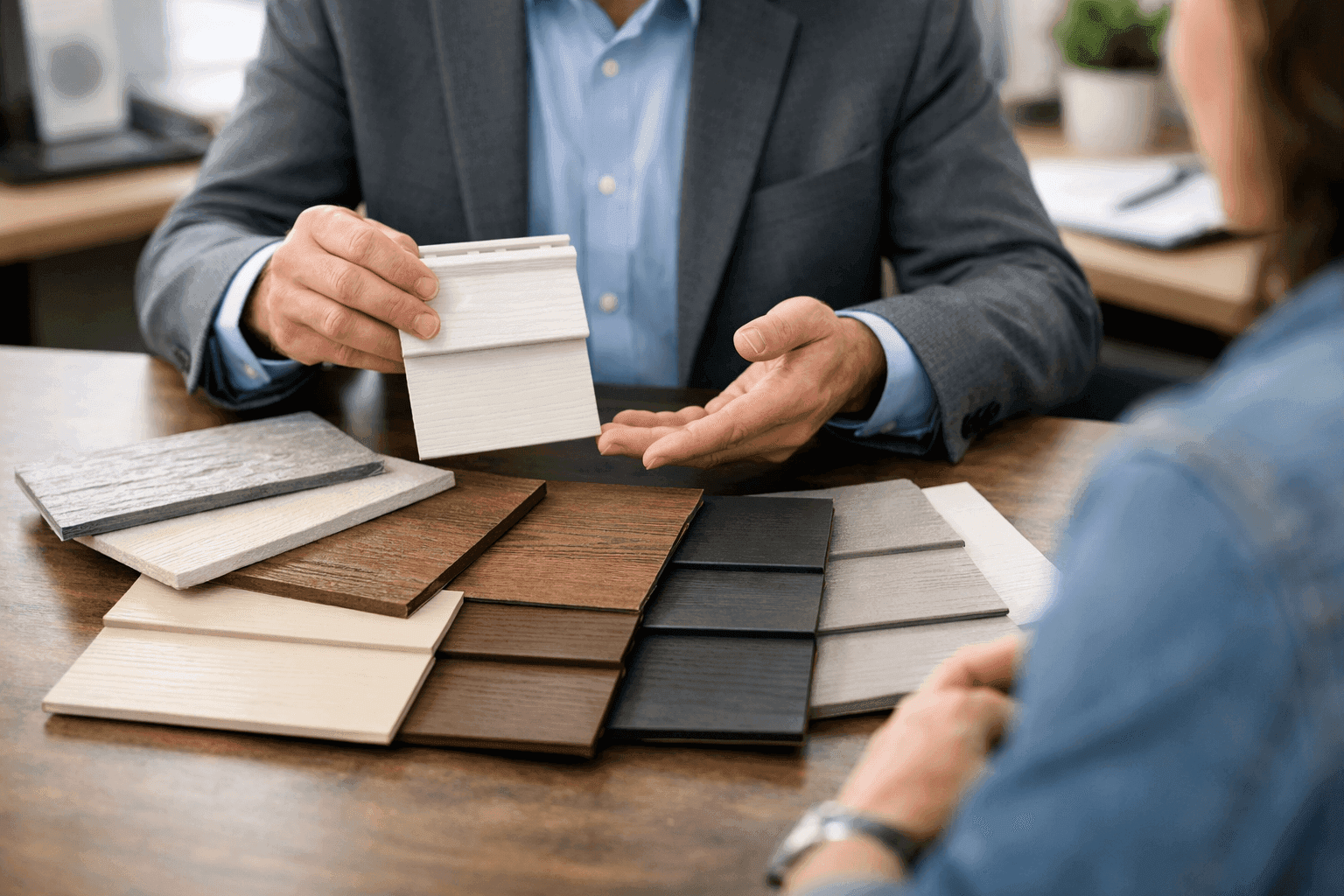
Then, we walk you through material samples—so you can see and feel the difference.
Prevention and Maintenance
No siding is “set it and forget it.” But some make life easier.
- Vinyl: Occasional rinsing keeps it fresh.
- Wood: Annual sealing, painting, and routine inspections.
- Metal: Watch for dents, especially after storms.
A yearly siding cleaning and maintenance visit keeps surprises at bay.
Costs and Time Factors
- Vinyl: Quick to install, less expensive.
- Fiber Cement: More prep work, higher material cost, but pays off with longevity.
- Wood: Installation is an art—takes longer, but the results stand out.
- Metal and Stucco: May require special tools or skills, adding to labor time.
Factor in trim, flashing, and insulation installation for a complete picture.
When It’s an Emergency
Storms strike. A tree branch falls. Suddenly, you need fast repairs.
Emergency siding services get you back to normal quickly. Quick action prevents water from sneaking behind the panels and causing bigger problems.
Seasonal Considerations
- Spring/Summer: Peak season for new installations and major repairs.
- Fall: Ideal for inspections and caulking before winter sets in.
- Winter: Emergency repairs only—extreme cold can make some materials brittle.
Common Mistakes to Dodge
- Ignoring climate—leading to warping, cracking, or mold.
- Skipping flashing or moisture barriers—hello, leaks!
- Choosing style over substance—what looks sharp may not last.
Signs Your Siding Needs Help
- Faded or cracked panels
- Gaps, warping, or loose boards
- Higher energy bills—signaling drafts or hidden leaks
- Mold, mildew, or soft spots
Don’t wait. Small issues grow fast.
Timeline and Disruption
A typical siding replacement can take a few days to a couple weeks. Weather, building size, and material choice all play a role. We’ll always keep you in the loop, so you know what to expect.
Materials and Equipment Pros Use
- Power saws, nail guns, safety harnesses
- Moisture meters and insulation
- High-quality caulking and sealing products
Professional crews follow OSHA safety guidelines to protect you and your property.
The Value of Professional Consultation
Choosing siding isn’t a solo journey. When you work with J.B. Siding, you get:
- Personalized recommendations based on your climate, budget, and style
- Guidance on code compliance and long-term maintenance
- Access to samples, manufacturer warranties, and the latest material innovations
Our team listens first. Every property is unique—so your siding solution should be, too.
Next Steps: How to Get Started
Ready to explore your options? Start with a siding material consultation. Bring your questions, ideas, and concerns. We’ll guide you from first sample to final nail.
For those looking for New Construction Siding near you or in-depth advice on residential projects, check out our Missoula siding experts for local insights.
Call J.B. Siding now — or reach us anytime at 855-598-5177 .