Siding for Commercial Buildings: Key Differences from Residential
When you think of siding, you might picture a cozy house on a quiet street. But commercial buildings have their own set of challenges—big ones. The stakes are higher, the needs are different, and the solutions must be up to the task.
At J.B. Siding, we’ve handled projects from small shops to sprawling office complexes. We know the difference the right siding makes. If you own or manage a commercial property, understanding these details could save you headaches—and money—down the line.
Commercial vs. Residential Needs
Picture a family home and a busy downtown office. They both need protection from the elements. But the similarities end there.
- Durability: Commercial buildings demand siding that can handle heavy foot traffic, loading docks, and the occasional delivery mishap. Residential siding faces Mother Nature, but not forklifts.
- Fire Codes: Commercial codes are strict. Materials often must meet local and national regulations. The National Fire Protection Association (NFPA) and International Building Code (IBC) set the bar high.
- Branding: The look of a business matters. Siding isn’t just a shell—it’s part of your brand’s first impression.
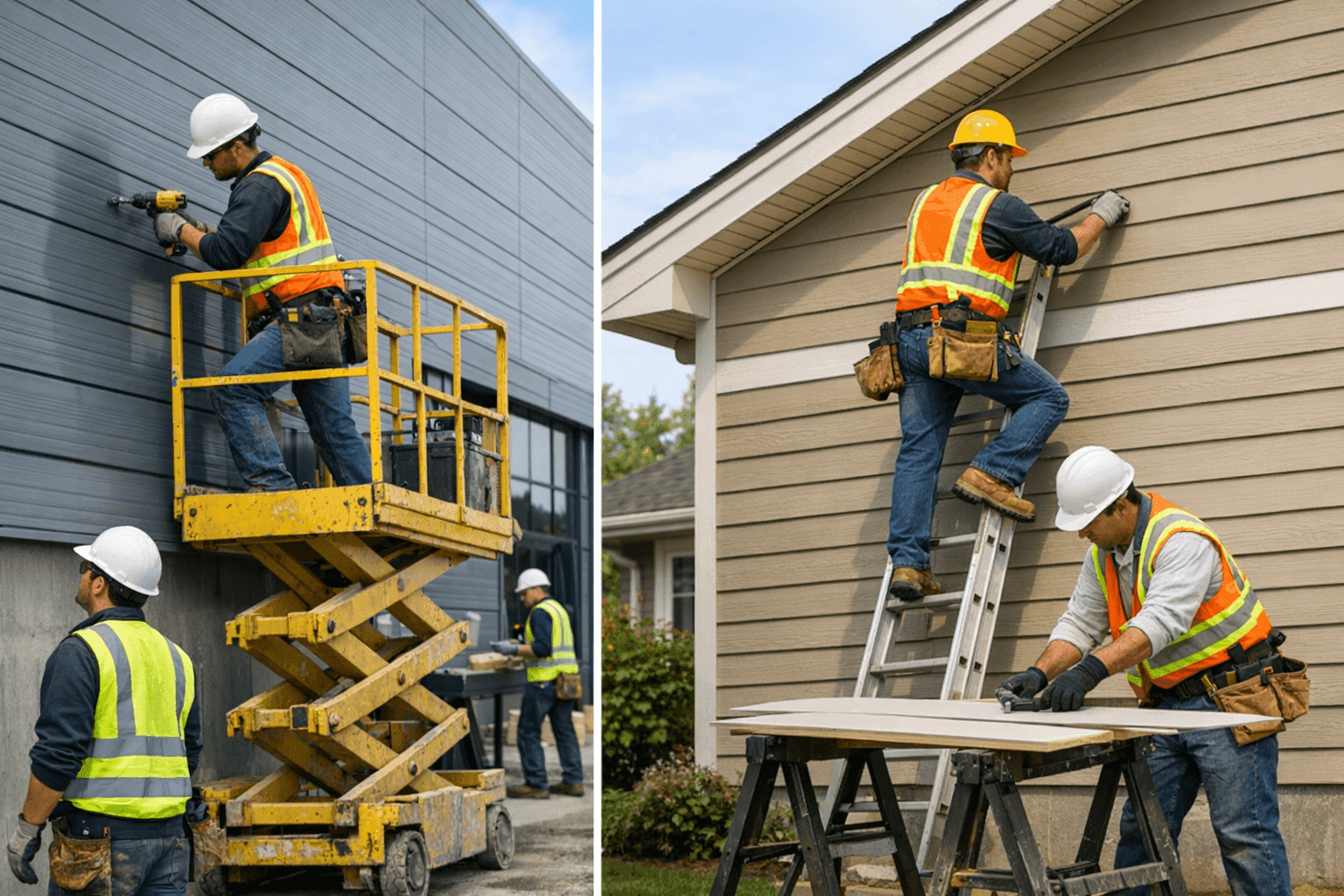
- Access: Tall walls and busy parking lots complicate installation. Commercial jobs often require lifts, scaffolds, and careful planning to avoid disrupting operations.
- Tenant Considerations: For multi-use or rental properties, siding choices can affect insulation, noise levels, and even tenant satisfaction.
Homes are like sweaters; they need to be warm and comfortable. Commercial buildings wear a suit of armor.
Material Options: What Works for Businesses 🏢
Picking siding for a business is like choosing tires for a truck—you want strength, not just style.
- Metal Siding: Durable, fire-resistant, and low maintenance. Ideal for warehouses and industrial facilities.
- Fiber Cement: Balanced strength and design flexibility. It resists moisture and pests—perfect for restaurants or clinics.
- Vinyl Siding: Affordable, easy to maintain, and available in many colors. Works well for offices and retail spaces, especially when budgets are tight.
- Stucco: Offers a polished, upscale look. Great for hotels or buildings aiming for curb appeal.
- Eco-Friendly Options: More businesses now seek sustainable materials, from recycled metal panels to engineered wood.
J.B. Siding’s siding material consultation helps you weigh the pros and cons for your specific project.
Installation Challenges: Scale and Complexity
A commercial siding job is never just “more of the same.” The scale changes everything.
- Bigger Projects, Bigger Equipment: You might need cranes or extended scaffolding. Safety is paramount, and OSHA (Occupational Safety and Health Administration) guidelines must be followed.
- Timing: Businesses can’t afford long shutdowns. Installations often happen after hours or in phases to keep doors open.
- Permitting: Commercial jobs typically need multiple inspections and sign-offs. Local codes may dictate everything from fire ratings to color choices.
- Weather Delays: Larger projects are more vulnerable to weather interruptions, which can stretch timelines.
Residential jobs can feel like painting a room. Commercial siding is more like painting a mural—on a highway overpass.
Branding Through Siding Choices
For many companies, the building’s appearance is the face of the brand. Color, material, and style choices all send a message.
- Custom Colors: Many businesses opt for brand colors or unique designs. Custom siding solutions can make a storefront pop.
- Logo Integration: It’s possible to incorporate company logos or signature elements into siding and trim.
- Modern vs. Traditional: The right style can attract the right tenants or customers. For example, sleek metal panels for tech startups, or classic wood accents for boutique retailers.
Our custom siding solutions are designed to match your business vision.
Safety Codes and Compliance
Commercial siding isn’t just about looks or weather protection. Safety is a legal requirement.
- Fire Resistance: Materials must often meet much higher fire-resistance standards than residential options. These standards are set by authorities like the IBC and local fire marshals.
- Wind and Impact Resistance: In hurricane zones or heavy traffic areas, siding must withstand severe conditions.
- Accessibility: Siding work must not interfere with ADA (Americans with Disabilities Act) compliance.
Cutting corners can mean fines or worse—keep compliance at the top of your list.
Maintenance Strategies for Commercial Siding 🧰
A little preventative care goes a long way, especially for commercial properties.
- Routine Inspections: Schedule regular siding inspections. Look for cracks, loose panels, or water damage.
- Siding Cleaning: Grime, pollution, and graffiti can all take a toll. Use proper cleaning agents for your material type.
- Repairs: Address minor issues before they become major headaches. Fast siding repair keeps the building looking sharp and extends its lifespan.
- Caulking and Sealing: Prevent water intrusion with high-quality caulking, especially around windows and doors.
Well-maintained siding is like a well-oiled machine—it just runs better.
Scale and Access: Unique Commercial Hurdles
Accessing the upper floors of an office building isn’t like grabbing a ladder for your garage. Safety is crucial.
- Safety Barriers: Protect pedestrians and tenants during work.
- After-Hours Work: Minimize disruption by scheduling outside business hours.
- Equipment Needs: Cherry pickers, scaffolding, and other specialized gear are often required.
Every job site is different. Planning is everything.
Tenant and Occupant Concerns
Commercial properties often mean shared spaces. Consider:
- Noise: Installation can be loud. Inform tenants ahead of time.
- Dust and Debris: Use barriers to limit mess. Clean up daily.
- Communication: Keep tenants updated on timelines and progress.
Happy tenants mean a happier property manager.
Weatherproofing: More Than Just a Shield
Water is the enemy. So is wind, sun, and snow.
- Flashing: Proper siding flashing directs water away from vulnerable spots.
- Soffit and Fascia: These details protect eaves and roof edges from weather and pests.
- Weatherproof Sealing: Keeps moisture out and energy bills down.
Think of weatherproofing as your building’s raincoat and windbreaker rolled into one.
Emergency Siding Services: Be Prepared
Storms and accidents happen. Fast action protects your investment.
- Storm Damage Repair: Address broken panels or leaks immediately to prevent further damage.
- Board-Ups: Temporary protection if siding is lost or compromised.
- Insurance Coordination: Document everything for quick claims processing.
Emergencies don’t wait—have a plan before you need one.
Siding Replacement: When It’s Time to Upgrade
Even the best siding wears out eventually.
- Signs to Watch For: Warping, fading, frequent repairs, or rising energy bills.
- Cost Considerations: Replacement is an investment, but new siding can boost property value and efficiency.
- Phased Replacement: For large properties, replace siding in stages to minimize disruption.
Treat your building like a fleet vehicle—regular updates keep it running smooth.
Color Consultation: Making the Right Impression
Color isn’t just about looks—it affects mood, branding, and tenant satisfaction.
- Consult With Pros: Siding color consultation helps you avoid clashing choices and ensures longevity.
- Fading: Some materials and colors resist fading better than others.
- Curb Appeal: A fresh look can attract new tenants or clients.
A new color is like a fresh coat of paint on your business outlook.
Insulation and Energy Efficiency
Siding is more than skin deep.
- Insulation Upgrades: Modern siding can include insulation to help cut heating and cooling costs.
- Energy Codes: Commercial buildings must often meet stricter energy efficiency codes.
- Comfort: Better insulation means happier tenants and employees.
Think of insulation as the hidden hero behind your siding.
Siding for New Construction: Planning Ahead
If you’re building new, you have more options—and more decisions.
- Material Selection: Choose materials that align with long-term maintenance and branding goals.
- Ventilation Solutions: Proper soffit and ventilation keep buildings healthy from the start.
- Integration: Plan siding, trim, and gutter installation together for a seamless finish.
The right choices today pay off for years.
Timeline & Disruption: What to Expect
Commercial siding projects take time. But knowing what to expect helps you plan.
- Project Timeline: Larger buildings mean longer schedules.
- Staging: Materials, equipment, and crews need space and coordination.
- Phases: Work may be divided into phases to keep parts of the building open.
Plan for the long haul—it’s worth it.
Common Mistakes and How to Avoid Them 🚫
A few missteps can cost you dearly.
- Choosing Cheap Materials: Savings now can mean bigger bills later.
- Ignoring Codes: Always check local and national regulations before starting work.
- Skipping Maintenance: Small problems grow fast if ignored.
- DIY on Complex Jobs: Commercial siding often requires professional expertise and equipment.
Avoid shortcuts. Your building—and your budget—will thank you.
Frequently Asked Questions
How often should commercial siding be inspected?
At least twice a year—spring and fall are good benchmarks.
Can I mix siding materials for visual effect?
Absolutely. Many modern buildings use a blend of textures and colors for impact.
What’s the most durable siding type for commercial use?
Metal and fiber cement are both strong contenders, but the best choice depends on your building and location.
Do I need special insurance for siding work?
Commercial projects generally require additional liability coverage. Check with your provider.
Where can I find New Construction Siding near you?
If you’re in the Eugene area, see our siding installation options for Eugene commercial properties.
Ready to upgrade your building’s siding? Call J.B. Siding now — or reach us anytime at 855-598-5177 .