How to Winterize Your Siding for Cold Weather
Cold weather can sneak up on you. One week you’re enjoying the last golden leaves, and the next, icy winds are rattling your siding. At J.B. Siding, we know how quickly winter can turn a small issue into a big headache—especially if your siding isn’t ready for the season ahead.
Winterizing your siding might sound like just another chore. But it’s the kind of prep that keeps your home or business safe, dry, and looking sharp. Whether you’re a homeowner or managing a commercial property, a few well-timed steps now could save you stress, money, and even bigger repairs down the road.
Why Winterize Siding? ❄️
Think of your siding as a sturdy coat for your building. When it’s in good shape, it keeps the warmth in and the moisture out. But as temperatures drop and freeze-thaw cycles begin, even the smallest cracks or gaps can invite trouble.
Key risks if you skip winter prep:
- Water seeping behind panels, leading to rot or mold.
- Energy loss from drafts and poor insulation.
- Expensive repairs after snow and ice storms.
The International Residential Code (IRC) and local building authorities both recommend regular siding inspections and maintenance—especially before harsh weather.
Inspect for Gaps, Cracks, and Loose Boards
Small flaws in your siding can open the door to big problems once the mercury falls.
Here’s what to look for:
- Cracks in siding panels or between joints.
- Gaps around windows, doors, or trim.
- Loose or warped boards.
- Areas where caulking has shrunk or pulled away.
Walk the perimeter. Use a flashlight to spot shadows that reveal gaps even on cloudy days. Don’t forget soffits and fascia—these areas are often overlooked.
Seal Around Trim, Windows & Doors
Those thin lines where siding meets trim? They’re highways for cold air and moisture if not sealed tight.
- Use high-quality, paintable exterior caulk.
- Focus on corners, window edges, door frames, and joints.
- Remove old, cracked sealant before applying new caulk.
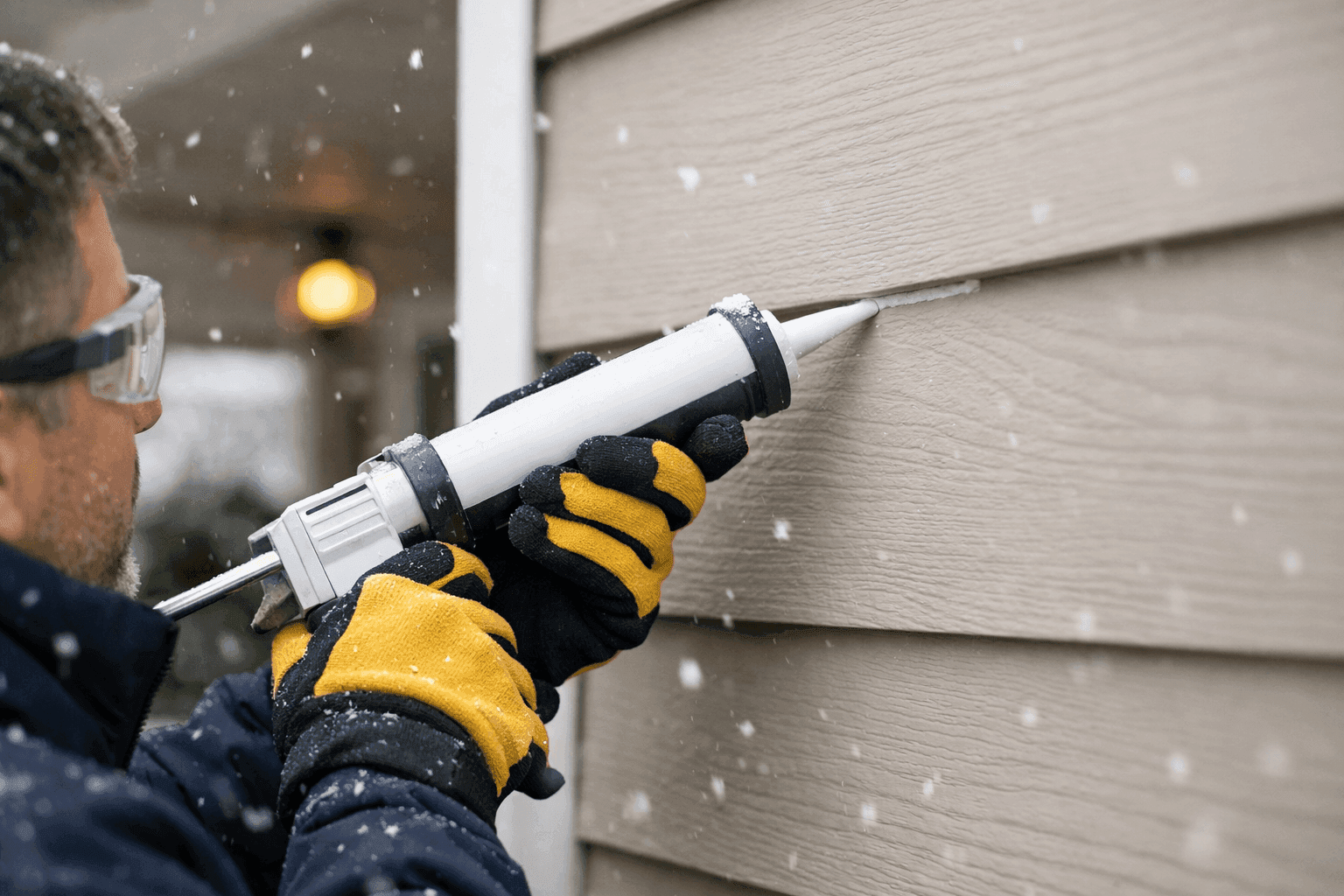
A weekend with a caulk gun can make a world of difference. The U.S. Department of Energy highlights proper sealing as one of the easiest ways to boost a building’s energy efficiency.
Clean Gutters and Downspouts
Clogged gutters and iced-up downspouts don’t just cause roof leaks—they also splash water against your siding, leading to staining and rot.
Winter gutter checklist:
- Scoop out leaves, pine needles, and debris.
- Flush gutters and downspouts with water.
- Check for sagging or leaks.
If you notice bent sections or missing hangers, repair them before the snow flies. Clean gutters mean water flows away from your siding, not into it.
Check Insulation Behind Siding
Insulation is the unsung hero of winter comfort. Poor insulation means higher bills and cold spots inside.
- Inspect attic and wall insulation if accessible.
- Look for dampness or mildew, a sign moisture is getting in.
- If you have older siding, consider adding a weather-resistant barrier.
Professional insulation installation can make new construction siding near you even more efficient.
The Freeze-Thaw Cycle: How It Damages Siding
Picture a sponge that fills with water, then freezes. Water expands as it freezes, prying apart even the toughest materials.
With siding, freeze-thaw cycles can:
- Widen cracks and force apart joints.
- Push nails out of place, loosening panels.
- Create bulges or ripples, especially in vinyl or wood siding.
Catch these issues early, and repairs are fast and affordable.
Siding Maintenance: Your Winter Prep Routine
Regular siding maintenance isn’t just a spring or summer job. Winter brings its own challenges.
Tasks to add to your winter prep:
- Remove snow buildup from lower siding after storms.
- Watch for ice dams at roof edges.
- Sweep away salt and deicing chemicals—they can stain or corrode metal siding.
A quick siding inspection before winter is a smart move for homeowners and property managers alike.
Signs of Cold Weather Siding Damage
How do you know if winter’s already taking a toll? Watch for these warning signs:
- Peeling paint or bubbling surfaces.
- Dark streaks (from water intrusion).
- Soft or spongy spots, especially near the base.
- Drafts inside, especially near windows and outlets.
If you spot any of these, act quickly. Early repairs are less disruptive and less costly.
DIY Winterizing vs. Calling a Pro
Some siding prep tasks are weekend DIY projects. Others need a trained eye.
DIY-friendly:
- Cleaning gutters.
- Sealing small gaps.
- Brushing off snow.
Best left to a professional:
- Major repairs or panel replacements.
- Siding ventilation solutions.
- Insulation upgrades.
- Full siding weatherproofing.
A professional team like J.B. Siding brings experience, proper tools, and safety know-how—especially important for commercial siding projects or multi-story homes.
What To Expect When Pros Arrive
Wondering what happens during a professional winter prep visit?
- Complete exterior inspection, including trim and flashing.
- Detailed report of problem areas.
- Recommendations for immediate fixes and long-term maintenance.
- Use of code-compliant materials and methods.
You get peace of mind, and your siding gets the protection it needs.
Common Mistakes to Avoid
It’s easy to miss a step or use the wrong materials. Here’s what can trip up even seasoned property owners:
- Using indoor caulk outdoors (it cracks fast).
- Ignoring small holes or animal damage.
- Forgetting about soffit and fascia repair.
- Power washing too late in the season (trapped moisture can freeze).
When in doubt, ask a pro for a quick consultation.
Siding Materials: Weather Performance
Different siding materials respond to winter in different ways.
- Vinyl Siding: Can become brittle; avoid impacts in freezing temps.
- Wood Siding: Needs extra protection against moisture; repaint or reseal as needed.
- Fiber Cement: Extremely durable, but joints must be properly sealed.
- Metal Siding: Resistant to moisture, but watch for rust at scratches or joints.
Not sure what you have? Schedule a siding material consultation.
Emergency Siding Repairs in Winter
Storms don’t wait for spring. If you see blown-off panels or water pouring down a wall, act fast.
- Temporarily cover exposed areas with plastic sheeting.
- Avoid climbing ladders on icy days—safety first.
- Call for emergency siding services if needed.
Knowing who to call before you need help can save you valuable time.
Timeline & Disruption: What to Expect
Most winterizing tasks can be done in a single day. Complex repairs or full replacements may take longer, especially if weather delays outdoor work.
- Light maintenance: 1–2 hours.
- Full inspection and sealing: 1 day.
- Major repairs: 2–5 days, weather depending.
Always ask for a clear timeline up front.
Ongoing Winter Maintenance Tips 🧣
Winterizing isn’t a one-and-done job. Keep an eye on your siding all season long.
- After heavy snow or ice, check for damage.
- Watch for signs of leaks inside.
- Keep vents and soffits clear of snow buildup.
Schedule a mid-winter check if you experience severe storms.
Costs: Smart Investments
A little prevention now can save a lot later. While prices vary based on the size of your home or business, typical winterizing and inspection fees are modest compared to emergency repairs or siding replacement after a tough winter.
Frequently Asked Questions
Q: Can I paint my siding in winter?
A: Painting is best done in mild, dry weather—usually not below 50°F, as most paints won’t cure properly.
Q: Is siding cleaning safe in cold months?
A: Yes, but use minimal water and choose a sunny, above-freezing day to avoid ice.
Q: How do I know if my siding needs replacement, not just repair?
A: If you notice widespread rot, warping, or persistent leaks, it’s time to consult a siding professional.
Ready to Prepare Your Siding for Winter?
Whether you’re looking for new construction siding near you or maintaining a historic property, getting your siding winter-ready is one of the smartest moves you can make. For homeowners in Texas, check out our siding services in Waco for more details on siding weatherproofing and maintenance.
Protect your investment. Keep your family or business safe and warm.
Call J.B. Siding now — or reach us anytime at 855-598-5177 .