How to Tell If Your Siding Is Properly Insulated
Is your home feeling drafty, even though the windows and doors are closed tight? Does your office space struggle to keep a steady temperature, no matter what the thermostat says? If your energy bills are quietly climbing, your siding insulation could be the culprit.
At J.B. Siding, we know that proper siding insulation isn’t just about comfort. It’s about protecting your investment, reducing waste, and ensuring year-round peace of mind. Let’s break down how you can tell if your siding is doing its job—and what to do if it isn’t.
Why Insulation Matters
Insulation is a silent workhorse. It keeps your indoor spaces warm in winter, cool in summer, and everything in between. Think of it as a cozy blanket for your building—without it, you’re left exposed to the elements.
- Energy Efficiency: Poorly insulated siding lets conditioned air slip away, forcing your HVAC system to work overtime.
- Comfort: Hot and cold spots, drafts, and humidity issues can all trace back to inadequate insulation.
- Protection: Proper insulation also helps block moisture, preventing mold, mildew, and wood rot.
- Cost Savings: A well-insulated property costs less to heat and cool, saving you money over time.
The U.S. Department of Energy and local building codes provide guidance on recommended insulation values (R-values) for different climates. These aren’t just suggestions—they’re standards designed to safeguard your property and wallet.
Warning Signs Your Siding Isn’t Insulated Well ⚠️
How do you know if your siding is letting you down? Look—and feel—for these red flags:
- Drafts: Cold breezes or temperature changes near your walls, even with everything closed up.
- Uneven Room Temperatures: Some rooms are sauna-hot, while others are chilly.
- Rising Utility Bills: No major lifestyle changes, but your heating or cooling costs keep creeping up.
- Condensation or Moisture: Water beads on your walls or windows, especially in winter.
- Noise: Outdoor sounds seem louder inside, as if your walls are paper thin.
- Visible Damage: Warped siding, cracks, or gaps can signal insulation failure beneath.
If you notice one or more of these, it’s time to investigate.
Quick Safety Checklist Before You Inspect
Before you start poking around your siding, take a moment for safety:
- Turn off power to areas where you’ll be working.
- Use a sturdy ladder on level ground if inspecting high spots.
- Wear gloves and eye protection, especially if handling insulation or siding panels.
- Watch out for pests or mold—these can be both health hazards and signs of insulation problems.
The DIY Checks: Simple Ways to Test Your Siding
You don’t need fancy gear to get started. Here are two quick ways to check for poor insulation:
The Touch Test
On a cold day, press your hand against an exterior wall from the inside. Does it feel cold or even damp? That’s a hint your insulation isn’t doing its job.
The Infrared Thermometer
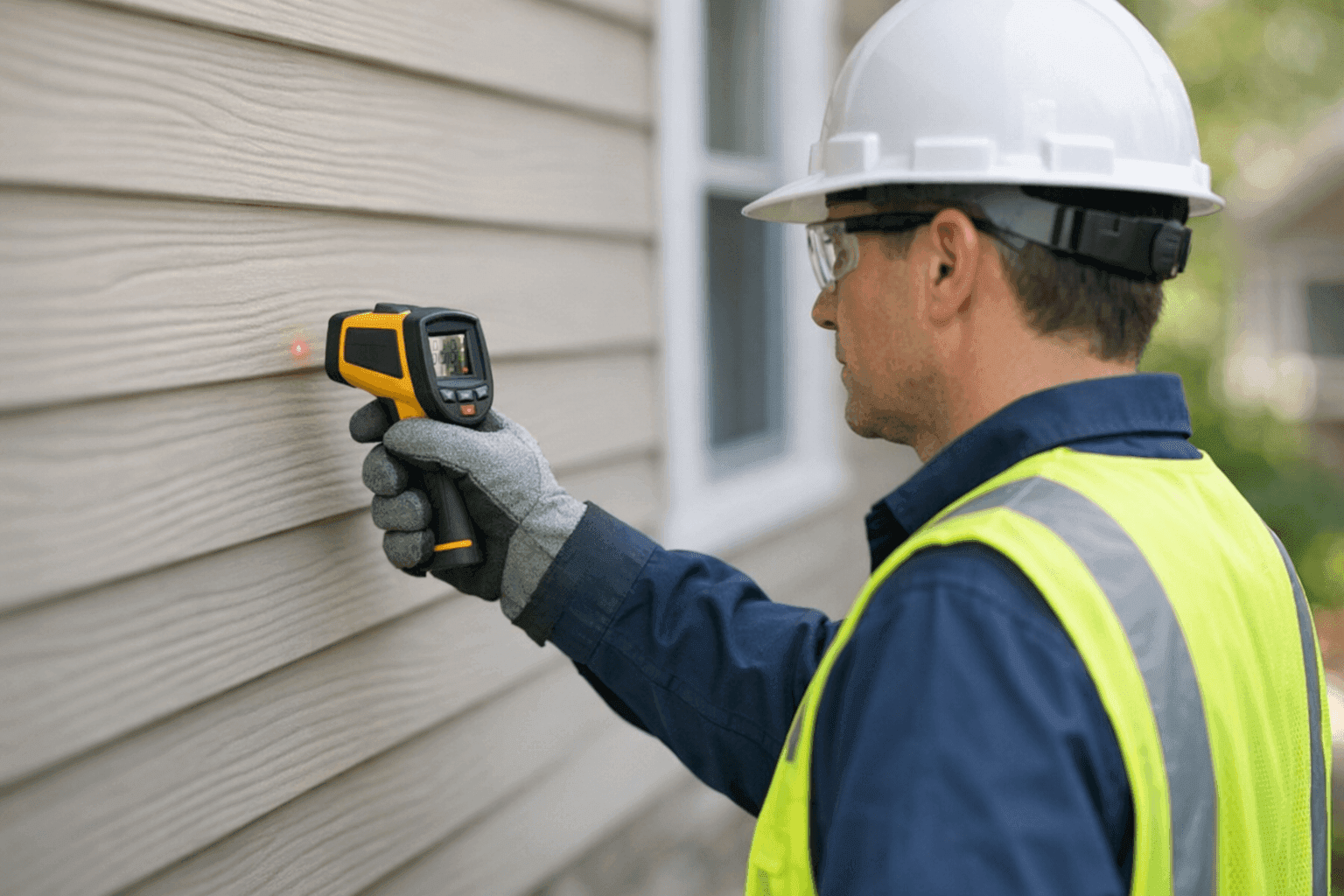
Pick up an affordable infrared thermometer from a hardware store. Scan your walls, especially at corners and around windows. Big temperature swings from one area to another suggest gaps in insulation.
Candle or Incense Smoke Test
Light a stick of incense or a candle and hold it near wall edges, outlets, and baseboards. If the smoke wavers or blows toward you, air is leaking through—another sign of insulation issues.
When to Call a Pro: What Siding Experts Really Do
DIY checks can only take you so far. At J.B. Siding, our team uses specialized tools and years of experience to find what the eye can’t see.
- Thermal Imaging Cameras: These reveal cold spots, moisture, and insulation gaps behind siding—no guesswork, just clear answers.
- Moisture Meters: We check for hidden leaks that might be degrading your insulation and siding from the inside out.
- Detailed Siding Inspection: We look for cracks, missing flashing, and improper installation that could compromise your insulation. Learn more about our siding inspection process.
We follow all relevant building codes and safety standards, ensuring you’re not just comfortable, but protected for the long haul.
Upgrading Your Siding Insulation: Options and Considerations 🏡
If your siding is underperforming, what are your options? There’s no one-size-fits-all answer, but here’s where to start:
- Add or Replace Insulation: This may involve removing siding panels, installing new insulation, and reattaching or upgrading your siding.
- Choose Better Materials: Modern siding products—like insulated vinyl, fiber cement, or composite panels—offer built-in insulation and weatherproofing.
- Seal the Gaps: Caulking, sealing, and flashing repairs can work wonders for minor issues.
- Eco-Friendly Solutions: Recycled materials and sustainable siding can boost insulation and lower your carbon footprint. Explore eco-friendly siding options.
Want a custom solution? J.B. Siding can tailor upgrades to your building’s age, style, and budget.
Siding Insulation for New Construction: Getting It Right From Day One
Building a new home or commercial property? Proper insulation starts with the right siding—installed correctly. We recommend discussing insulation values and siding materials early in the design process. Ask about “New Construction Siding near you” to ensure your investment is protected from the outset.
The Hidden Costs of Ignoring Siding Insulation
Cutting corners on insulation is like leaving a window open all year long. The costs add up:
- Higher energy bills, month after month.
- Wear and tear on your HVAC system.
- Potential for mold, rot, or pest infestations.
- Reduced property value and curb appeal.
Fixing insulation issues now is almost always cheaper (and less stressful) than dealing with bigger problems down the road.
When Poor Insulation Becomes an Emergency
Sometimes, insulation issues need urgent attention—think major drafts during a cold snap, or water leaks after a storm. If your siding is suddenly letting in water or cold air, don’t wait. Emergency repair services can prevent further damage and keep your space safe.
Seasonal Siding Insulation Checks
Every season brings its own challenges. In spring and fall, check for drafts and moisture. After a storm, inspect for siding damage. In winter, watch for ice dams or condensation indoors. Regular maintenance keeps insulation issues from sneaking up on you.
Common Mistakes to Avoid
- Ignoring small drafts or water stains.
- Assuming new siding always means good insulation.
- Using the wrong type of insulation for your climate.
- Skipping annual siding inspections.
Stay ahead of problems by being proactive—not reactive.
Materials and Equipment: What Matters Most
Not all siding or insulation is created equal. The best choice depends on your climate, building type, and budget.
- Vinyl Siding with Insulated Backing: Affordable and effective for many homes.
- Fiber Cement Siding: Durable, fire-resistant, and excellent for insulation upgrades.
- Wood Siding: Classic look, but requires careful installation and maintenance.
- Spray Foam or Rigid Foam Boards: High R-values for maximum thermal performance.
A professional can help you weigh the pros and cons, and choose what’s best for your space.
How Long Does Siding Insulation Work Take?
Most upgrades take a few days, depending on the size of your building, the extent of the work, and the weather. Some repairs can be done in a day; full replacements may take longer. Our team works efficiently to minimize disruption and keep your project on track.
Frequently Asked Questions
Q: How often should I check my siding insulation?
A: We recommend a quick check every season, and a professional inspection every 2–3 years.
Q: Can I add insulation without replacing my siding?
A: Sometimes, yes. Techniques like blown-in insulation can boost performance without a full replacement.
Q: Is there a “best” insulation for every building?
A: The “best” option depends on your needs, climate, and siding type. Let’s talk about what fits your property.
Ready for Better Comfort? Let’s Upgrade Your Siding Insulation!
Don’t let poor insulation sap your comfort or drain your wallet. If you’re noticing the warning signs, it’s time to act. Our friendly team at J.B. Siding brings years of hands-on experience—whether it’s a quick fix or a complete upgrade.
If you’re searching for siding services in Melbourne, FL, J.B. Siding is your go-to for siding insulation and upgrades.
Call J.B. Siding now — or reach us anytime at 855-598-5177 .