How Often Should You Replace Your Siding?
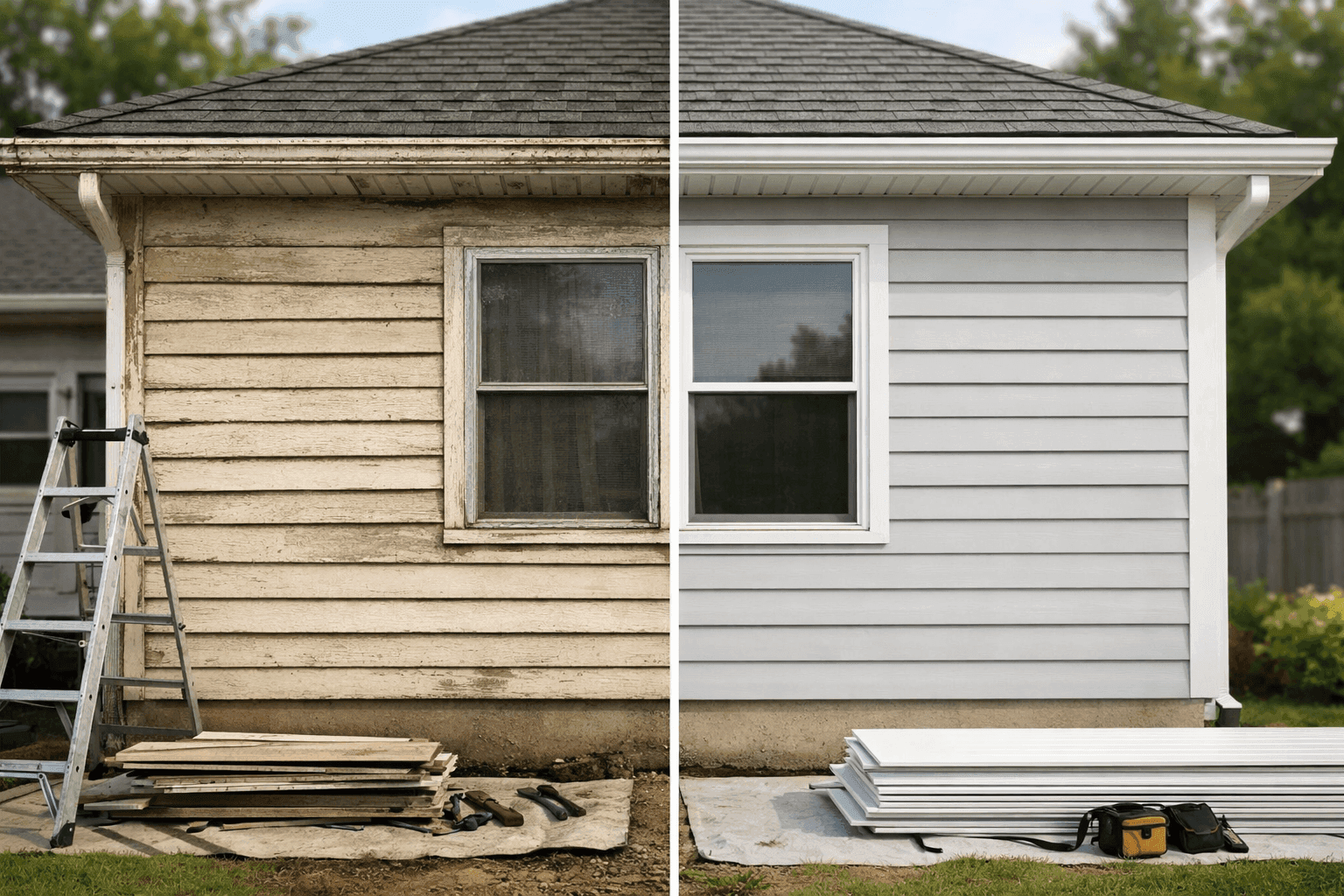
It’s easy to forget about siding—until it isn’t. Dings, cracks, and fading might sneak up on you, but the truth? Your siding works overtime every season, shielding your home or business from wind, rain, and whatever else the sky throws down. At J.B. Siding, we’ve seen what happens when replacement is put off too long. The fix is never cheaper later.
If you’re asking yourself, “How often should I replace my siding?”—you’re not alone. Let’s break it down by material, warning signs, and why timely replacement matters.
Siding Lifespan by Material ⏳
Think of siding as the armor for your house or business. But even steel gets rusty. Here’s what you can expect from different types:
- Vinyl Siding: 20–40 years. Durable, but sunlight and storms wear it thin over time.
- Fiber Cement: 30–50 years. Strong as concrete, but still needs care.
- Wood Siding: 15–30 years. Beautiful, but high maintenance. Moisture and bugs are its enemies.
- Stucco: 50–80 years. Long-lasting if installed right, but cracks can ruin it fast.
- Metal Siding: 40–70 years. Tough, especially against fire and pests, but dents and rust can creep in.
- Engineered Wood: 20–30 years. Better than old-school wood, but still needs regular painting and caulking.
Keep in mind: weather, shade, and maintenance all matter. A shady side might last longer than the one facing the afternoon sun. The National Association of Home Builders (NAHB) offers more on lifespan averages, but your experience may vary.
Signs You Need New Siding
Your siding doesn’t send a memo when it’s time to retire. But it does leave clues. Watch for these:
- Cracks, holes, or warping: Not just ugly—these let water in.
- Fading and chalkiness: UV rays break down color and surface.
- Loose or missing panels: Gaps invite critters and moisture.
- Blistering or bubbling: Trapped water is causing trouble behind the scenes.
- Rising energy bills: Drafty walls can mean insulation or siding failure.
- Interior damage: Peeling paint or mold indoors often traces back to bad siding.
- Rot, mold, or mildew: If you see it, it’s time.
If you spot these, it’s smart to schedule a siding inspection before the issues get worse.
The Hidden Risks of Waiting Too Long
Think of siding like the skin on your house. Let a scrape fester, and you risk infection—same goes for neglected siding. Here’s what can happen if you wait:
- Water damage: Leaks travel fast and can rot framing or drywall.
- Mold growth: Once inside, mold is hard to stop and expensive to fix.
- Pest invasion: Tiny cracks let in ants, termites, and even rodents.
- Structural repairs: Delayed siding replacement can mean replacing whole walls, not just the outer layer.
- Insurance headaches: Some insurers deny claims for pre-existing damage.
A proactive approach beats a crisis call every time.
Why Proactive Replacement Pays Off
It’s not just about looks (though new siding does turn heads). There are real, measurable benefits:
- Energy savings: New siding—especially with added insulation—keeps heating and cooling costs down.
- Stronger weather protection: Modern siding materials shield against storms, hail, and harsh UV.
- Increased property value: Curb appeal counts, whether you’re selling or just want to impress the neighbors.
- Lower maintenance: Fresh siding means fewer repairs and less painting.
- Better indoor comfort: No more drafts, no more leaks.
Replacement isn’t just a cost—it’s an investment in the building itself.
Planning Your Siding Project
Ready to take the next step? Here’s how to plan:
1. Assess Your Needs
Start with a walk-around. Note damaged spots, fading, and any panel movement. Don’t forget the soffit, fascia, and trim. If you’re not sure what you’re seeing, a professional siding material consultation helps.
2. Consider Your Material Options
Vinyl, fiber cement, wood, metal, stucco—each has pros and cons. Think about climate, budget, and long-term maintenance. The International Residential Code (IRC) has requirements about fire resistance and installation, so it’s not just about looks.
3. Budget and Timing
Costs vary widely by material and square footage. Factor in labor, removal of old siding, and possible repairs to sheathing or insulation underneath. Spring and fall are popular times to schedule replacement, but emergency repairs might not wait for perfect weather.
4. Prepare for Disruption
Siding replacement is noisy and dusty. Protect landscaping and prepare for some daily interruptions. Reputable installers will keep debris in check and clean up after.
5. Check Permits and Codes
Many towns require permits for siding replacement. Always check local building codes. Ask your contractor how they handle compliance and inspections.
Quick Siding Safety Checklist
Before you start any DIY work, review:
- Is there visible mold or rot? If so, call a pro—mold can be hazardous.
- Are power lines close to the work area?
- Is the structure free from loose asbestos siding? (If not, special handling is needed.)
- Have you checked ladders and safety gear?
Safety isn’t just a buzzword—it’s non-negotiable.
DIY vs. Professional: When to Call J.B. Siding
Some homeowners handle small repairs or cleaning. But full siding replacement? It’s a job for trained hands. Pros bring:
- Experience with proper flashing, caulking, and sealing.
- Knowledge of code requirements and warranties.
- The right tools to handle heavy or hazardous materials.
If in doubt, get a quote. It’s better than learning the hard way.
What To Expect When Pros Arrive
Here’s how a typical siding project unfolds:
- Initial inspection: Full walk-around and inside-check for leaks or mold.
- Material selection: Options, color consultation, and order placement.
- Removal: Old siding, damaged trim, and insulation come out.
- Repairs: Any underlying rot or framing damage is fixed.
- Installation: New siding, flashing, and trim, followed by caulking and painting if needed.
- Final inspection: Walk-through to catch any missed spots.
A good team will communicate at every stage.
Keeping Siding Looking Its Best
Want your new siding to last? Here’s how:
- Clean annually: Use low-pressure water, mild soap, and soft brushes.
- Check caulking and seals: Fill gaps before water gets inside.
- Trim trees and shrubs: Overgrowth can scratch and trap moisture.
- Inspect gutters: Clear clogs to prevent water backup.
These habits keep your siding strong year after year.
Seasonal Considerations for Siding
Hot summers and freezing winters both take a toll. Look for expansion gaps on hot days and brittleness in winter. After storms, check for dents and loose panels. Spring is ideal for cleaning and minor repairs.
Siding Replacement: Frequently Asked Questions
Q: Can I just repair damaged spots instead of replacing everything?
A: Sometimes. But widespread damage or old age means repairs won’t solve the root problem.
Q: How long does replacement take?
A: Most homes take 1–2 weeks, weather permitting.
Q: Do I need to leave during installation?
A: Usually not, but expect some noise and limited access to exterior doors and windows during work.
Q: Will new siding affect my energy bills?
A: Almost always for the better—especially with insulated or modern materials.
Common Mistakes to Avoid
- Waiting too long to address visible problems.
- Choosing materials based only on price.
- Skipping the inspection phase.
- Ignoring local code and permit requirements.
- Hiring uninsured or unlicensed installers.
Avoiding these can save you money, time, and headaches.
Siding for New Construction and Renovations
Building new or remodeling? Siding selection is crucial. Modern materials offer better fire safety, energy efficiency, and weatherproofing. If you’re searching for “New Construction Siding near you,” make sure you work with a team that understands both code and design.
Siding Solutions for Every Need
From storm damage repair to eco-friendly upgrades, there’s a siding solution for every building. Whether you’re after a fresh look or better protection, J.B. Siding delivers options that last.
If you’re in the area and want more details about siding replacement, check out our siding services in Greenwood for tailored recommendations.
Call J.B. Siding now — or reach us anytime at 855-598-5177 .